
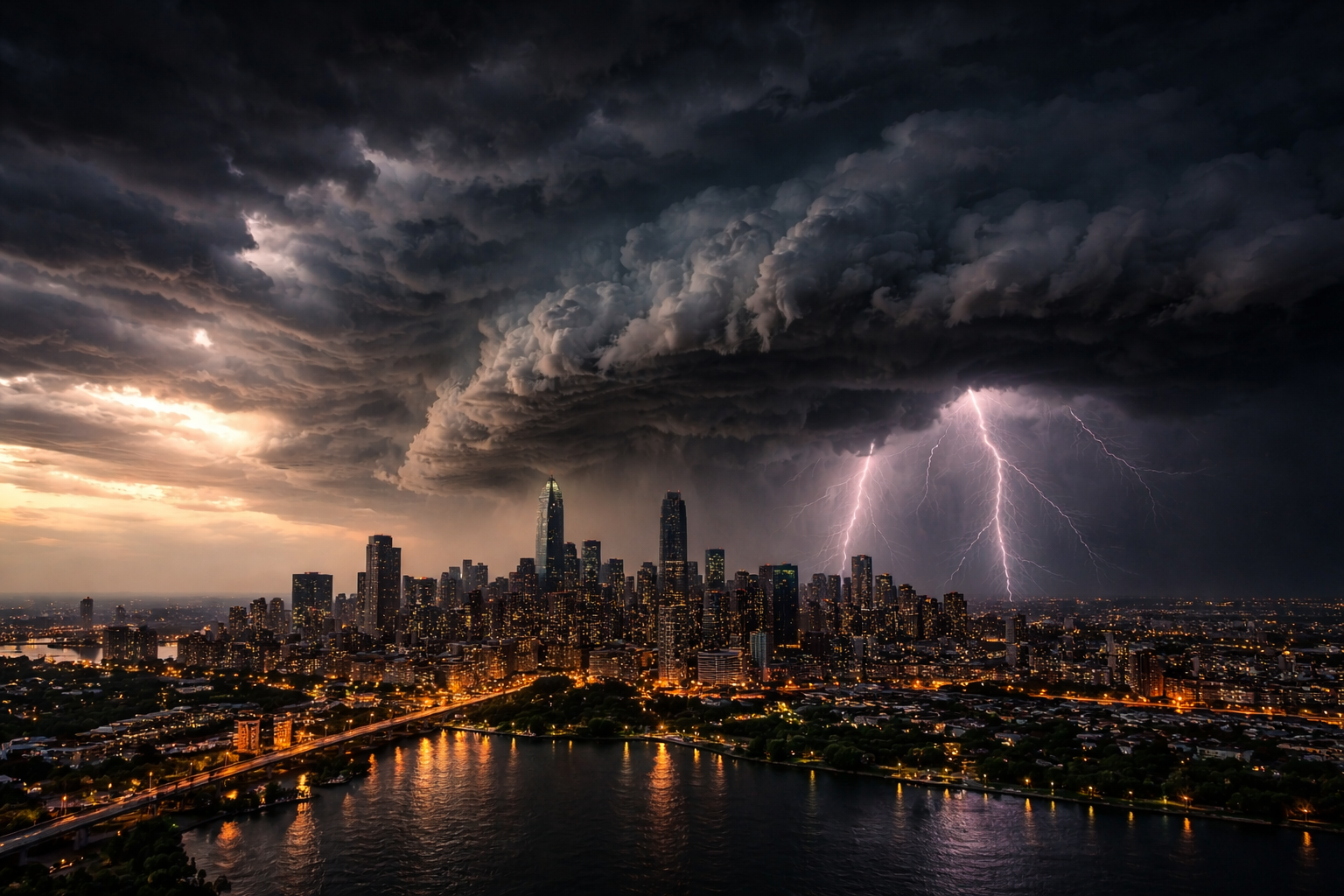
When a tornado is on the ground or a flash flood is bearing down on a community, emergency services and first responders cannot afford to be caught off guard. Every minute of warning time matters. Every piece of real-time information can mean the difference between a coordinated response and a chaotic one.
Weather radar is not just a tool for meteorologists. It is a critical operational resource for emergency managers, fire departments, law enforcement, search and rescue teams, and every organization responsible for keeping communities safe during severe weather events. The question is not whether emergency services need live radar — it is how to make that radar accessible to the people who need it most, when they need it most.
Why Weather Radar for Emergency Services Is an Operational Necessity
Emergency services operate in environments where conditions can change in minutes. A severe thunderstorm can produce a tornado with little warning. A slow-moving system can dump inches of rain in an hour, turning a dry creek into a raging flood. A wildfire can shift direction as wind patterns change ahead of a cold front.
Real-time radar gives emergency managers and first responders the ability to monitor these conditions as they develop — not after the fact. With live Doppler radar data updating every 4–5 minutes, emergency teams can track storm movement, identify areas of heaviest precipitation, monitor tornado signatures, and anticipate where severe weather will impact their coverage area next.
This information directly supports faster, more effective emergency response decisions — from positioning personnel and equipment ahead of a storm to issuing timely evacuation orders and coordinating search and rescue operations in the aftermath.
The Challenge of Accessing Professional-Grade Radar
Most free weather tools are built for consumers, not for emergency operations. Consumer apps are optimized for personal use — checking tomorrow’s forecast or deciding whether to carry an umbrella. They are not designed for the rapid-update, high-resolution radar data that emergency services need to make operational decisions during active severe weather events.
Professional-grade radar tools do exist, but many require enterprise contracts, complex software installations, or dedicated hardware. For smaller emergency management agencies, county offices, and volunteer fire departments, these solutions are often out of reach financially or technically.
This is the gap that embeddable radar solutions fill — giving emergency services access to professional-grade, real-time radar data through a simple interface that can be embedded directly into their own websites or operational dashboards.
How ZoomRadar Supports Emergency Services
ZoomRadar is listed by its own team as a solution specifically used by emergency services to monitor severe conditions and support rapid response during critical events. Here is what makes it well suited for emergency operations:
- Level 2 Doppler radar data — ZoomRadar uses Level 2 Doppler data from NOAA NEXRAD stations across the US, updating every 4–5 minutes. This is the same high-resolution data source used by professional meteorologists and the National Weather Service.
- Real-time tornado detection — Available on the $60/month plan, ZoomRadar’s tornado detection feature updates every 4–5 minutes and delivers a 90% average detection rate for EF2+ tornadoes. It identifies likely tornado activity using radar-based vortex and debris signatures within official NWS warning polygons, giving emergency services early warning of developing tornado threats.
- Location-specific coverage — ZoomRadar maps can be zoomed and centered on a specific county, district, or jurisdiction. Emergency managers see exactly the coverage area they are responsible for — not a national overview that requires zooming and searching during an active event.
- Overlays for operational awareness — Depending on the plan, ZoomRadar maps can display severe weather warnings, storm tracks, storm reports, lightning, temperatures, and winds — all the overlays an emergency manager needs to maintain situational awareness during a severe weather event.
- Simple access — The radar map embeds directly into a website or operational dashboard. No dedicated hardware, no complex software installation. Any device with a browser can display the live radar map.
- Affordable pricing — Plans start at $12 per month with publicly listed pricing. No enterprise contract or sales process required for most use cases.
Setting Up ZoomRadar for Your Specific Emergency Service
The setup process is the same across emergency service types — choose a plan, configure your coverage area, and receive an embed code — but which overlays and features matter most depends on the operation. Here’s how that looks for three common emergency service types.
911 Dispatch Centers
A 911 dispatch center’s core need is correlating weather conditions with incoming call volume in real time — knowing when a storm cell moving through a specific area is likely to generate a spike in calls before dispatchers see it happen.
Setup: Configure ZoomRadar’s coverage area to match the dispatch center’s exact jurisdiction rather than a broader regional view, so the map reflects only the area dispatchers are actually fielding calls for. Enable the warnings and watches overlay so active alerts appear automatically without a dispatcher needing to check a separate source. Storm tracks are particularly useful here, since they let dispatchers see a storm’s projected path and anticipate which parts of the jurisdiction are likely to generate calls next.
Placement: Many dispatch centers embed the map on an internal operations dashboard alongside their call-handling software, rather than on a public-facing page, so the radar is visible to dispatchers without switching applications.
Fire Departments
Fire departments have two distinct weather-related needs: monitoring severe weather that could damage structures or downed power lines, and — in wildfire-prone regions — tracking wind and lightning conditions that affect fire behavior and ignition risk.
Setup: Beyond ZoomRadar’s base radar and warnings overlay, fire departments in wildfire-risk areas benefit from enabling the wind overlay, since wind speed and direction directly affect how a fire spreads. The lightning overlay is also relevant, since dry lightning strikes are a common wildfire ignition source. For departments primarily concerned with severe thunderstorms and straight-line wind damage, storm tracks and warnings cover the core need without extra configuration.
Placement: A public-facing page works well here, since fire departments’ public information role includes proactively giving residents visibility into current conditions during high fire-risk weather, not just responding to active incidents.
EMS and Ambulance Services
EMS operations care most about whether severe weather will affect response routes and travel times — a tornado warning or major storm cell moving through a coverage area can mean rerouting ambulances away from an active threat zone.
Setup: Real-time tornado detection (available on ZoomRadar’s $60/month plan) is especially relevant for EMS operations in tornado-prone regions, since it flags developing tornado activity directly on the map rather than requiring staff to interpret raw radar signatures themselves. Storm tracks add to this, giving EMS coordinators a practical view of which routes might become unsafe or impassable as a storm develops.
Placement: Like 911 centers, EMS operations typically embed the map on an internal dispatch or operations view rather than a public page, since the primary use case is operational decision-making, not public information.
Embedding Radar into Your Emergency Operations Website
Many emergency management agencies and local government organizations maintain public-facing websites where community members look for information during severe weather events. Embedding a live radar map directly into that website serves two purposes: it gives your operations team a readily accessible radar tool, and it gives your community a trusted source for real-time severe weather information — keeping them informed and on your platform rather than scattered across third-party apps.
The embedding process is straightforward. After subscribing to ZoomRadar, you receive a custom map URL configured to your jurisdiction. Paste that URL into your website’s HTML editor and the live radar map appears on your page — no developer required for most website platforms.
The Bottom Line
Emergency services and first responders carry the weight of community safety during the most dangerous weather events of the year. Having access to real-time, professional-grade radar data — embedded directly into the platforms your team and your community already use — is not a luxury. It is an operational necessity.
ZoomRadar was built to make that accessible. Professional-grade Level 2 Doppler radar, real-time tornado detection, location-specific coverage, and transparent pricing — for emergency services of any size.
Frequently Asked Questions
Why do emergency services need live weather radar?
Emergency services operate in environments where conditions can change in minutes. Live weather radar gives emergency managers, fire departments, and first responders real-time visibility into approaching storms, tornado signatures, flooding threats, and wind shifts — supporting faster, more effective response decisions during active severe weather events.
What weather radar data does ZoomRadar use for emergency services?
ZoomRadar uses Level 2 Doppler data from the NOAA NEXRAD network — the same high-resolution data source used by professional meteorologists and the National Weather Service. Data updates every 4–5 minutes, giving emergency operations teams current storm location, intensity, and movement information.
Can smaller emergency management agencies afford professional radar?
Yes. ZoomRadar plans start at $12 per month with publicly listed pricing and no enterprise contract required. This makes professional-grade Level 2 Doppler radar accessible to county emergency management offices, volunteer fire departments, and smaller local government agencies that cannot afford enterprise weather data contracts.
How does ZoomRadar’s tornado detection work for emergency services?
Available on the $60 per month plan, ZoomRadar’s real-time tornado detection updates every 4–5 minutes and delivers a 90% average detection rate for EF2+ tornadoes. It identifies likely tornado activity using radar-based vortex and debris signatures within official National Weather Service warning polygons — giving emergency services early warning of developing tornado threats.
Can emergency services embed radar into their public website?
Yes. ZoomRadar’s live radar map embeds directly into any website via a simple URL paste — no developer required. Emergency management agencies can display real-time radar on their public-facing website, giving community members a trusted source for severe weather information during active events.
Does ZoomRadar require special hardware or software for emergency use?
No. ZoomRadar runs entirely in a browser — no dedicated hardware, no software installation, no IT project required. Any device with a browser can display the live radar map, making it immediately accessible to emergency teams in the field, in vehicles, or at an operations center.
How should a 911 dispatch center configure ZoomRadar?
Set the coverage area to match the dispatch center’s exact jurisdiction, and enable warnings, watches, and storm track overlays so dispatchers can anticipate call volume from approaching weather. Many centers embed the map on an internal operations dashboard rather than a public page.
What overlays matter most for fire departments using ZoomRadar?
It depends on the risk profile. Departments in wildfire-prone regions benefit from the wind and lightning overlays, since both affect fire behavior and ignition risk. Departments primarily concerned with severe thunderstorms and wind damage can rely on the standard storm tracks and warnings overlays.
Can EMS services use ZoomRadar to avoid severe weather during response routes?
Yes. ZoomRadar’s storm tracks show a storm’s projected path, and real-time tornado detection (on the $60/month plan) flags developing tornado activity directly on the map — both help EMS coordinators identify routes that may become unsafe as severe weather develops.
How do I embed weather radar for emergency management?
Subscribe to a ZoomRadar plan and provide your jurisdiction’s coverage area. ZoomRadar configures a custom map URL for that coverage area and sends it to you, ready to paste into your website’s HTML editor or operations dashboard — no developer required. The live radar map appears immediately and updates automatically as conditions change.
Ready to Add Live Radar to Your Website?
See how easy it is to embed professional-grade weather radar on your site. No sales process, setup in days.