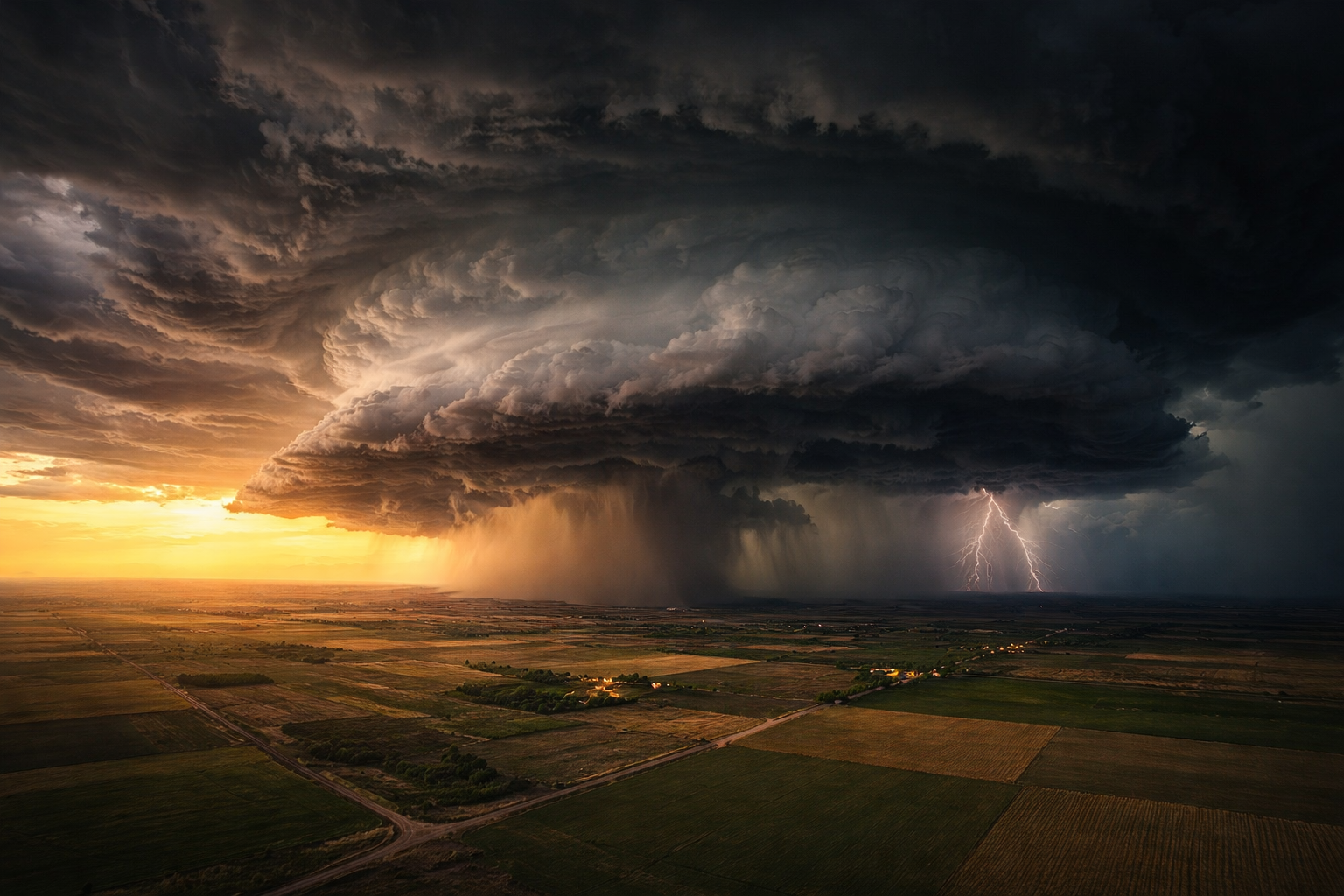
Strong Storms headed to DelMarVa Area

By Chris Hubbard

A mid level trough is headed to the DelMarVa region and will reach the area tonight. This system will be cause of some potentially serious weather effecting places from Richmond to Philadelphia. A strong low pressure (~992mb) is one of the main proponents of the severity of the weather.

Some strong vertical wind shear is also going to be in play, elevating CAPE levels (seen in the upper left hand picture). A strong pocket of PVA is associated with this front (bottom left), which is what will cause the heights to fall so low. A low pressure system with this low of a level almost looks like a winter Nor’easter and is not very common for June when we are so close to solstice. Tornado watches will most likely be issued for the DelMarVa region as well as for SE PA. Strong thunderstorm warnings will be far more extensive, reaching down into the Carolinas as the derecho stretches further south.

There is also a chance for thunderstorms throughout Wednesday night as the warm front associated with the low passes through. Some late night thunderstorm warnings may be issued, an not so common occurrence. Once the warm front passes through, a plume of warm, moist air will enter the region, leading up to the events on Thursday.

Model simulations from SimuAWIPS.


Facebook Twitter Stumbleupon Email

Threat of Mesoscale Convective System Tonight


The risk of severe weather will be aided by a strong upper level low working its way into the northern plains this evening.

Convective Outlook (SPC)


As for tonight, the ingredients needed for the formation of a mesoscale convective system (MCS) is highly possible.

http://cimss.ssec.wisc.edu/goes/blog/wp-content/uploads/2012/07/120706_suomi_npp_viirs_ir_dnb_ND_SD_anvil_waves_anim.gif

MCSs

  • May start from one cell or from a group of convective cells
  • May initiate as a line along a cold front, dryline, or other mesoscale boundary
  • Occur worldwide and year round
  • Are generally stronger and more organized in a sheared and highly unstable environment
  • Are strongest and live longest when strengths of the cold pool and low-level vertical wind shear remain in balance


MCS Types

  • Squall line
  • Bow echo
  • Mesoscale convective complex (MCC)


MCS Weather Threats

  • Damaging winds
  • Severe turbulence and wind shear
  • Intense lightning
  • Large hail
  • Heavy rain and flooding
  • Tornadoes

Courtesy of the COMET Program.


Around midnight EST…

A nocturnally unstable atmosphere of over 2000 J/kg of CAPE.

Most Unstable CAPE (Courtesy of COD Meteorology)


And the existence of a 70 mph low level jet (LLJ) is looking to aid in the organization of a MCS which could track from Rapid City to as far as Chicago.

850mb Wind Speeds (Courtesy of COD Meteorology)

NAM Forecast Radar Reflectivity (Courtesy of PSU e-wall)


by Mark Sperduti

Facebook Twitter Stumbleupon Email

SPC Outlooks

Posted by Tyler Castillo

For today, the Storm Prediction Center has issued slight risks for two regions. These include central Tennessee and a much larger region stretching from South Carolina to southern Pennsylvania.

Day 1 Outlook

The current convective watches line up perfectly with the slight risks. These watches include the following:


Severe thunderstorm watch until 11 p.m. ET extending from southern Tennessee up to central Kentucky. The main threats include large hail and damaging winds.


Tornado watch until 10 p.m. ET for most of central Tennessee. Storms have already started to form across this area with stronger storms expected to develop as a result of daytime heating. Large hail and several tornadoes can be expected throughout the day if conditions continue to become more favorable.


Tornado watch for North and South Carolina until 10 p.m. ET. As with the tornado watch for Tennessee these storms are expected to increase in number and strength as daytime heating takes place.


The last tornado watch issued as of right now includes Virginia to south Pennsylvania. The watch will be effective until 10 p.m. ET. Storms are expected to continue developing and strengthening throughout the evening.


As for tomorrow, we can expect to see storms develop around the central and northern plains and into the Midwest as a result of strong mid level flow.


Facebook Twitter Stumbleupon Email

The National Outlook

By Chris Hubbard

Record heat in the Southwest and another wet week for the Eastern seaboard are the two main topics in this weeks weather. An upper level trough is currently heading towards the Mississippi Valley, causing a strong influx of moist Gulf air ahead of it. This will be cause to some wet weather for the Southeast for the end of the weekend. As the week progresses, this moisture will move up the coast, hitting most of the Atlantic coastline.

Meanwhile, high pressure has built into the deserts of the SW, causing temperatures to climb into the triple digits. These conditions should die off by Monday however as a low pressure system comes into the region.


Facebook Twitter Stumbleupon Email

Andrea Now a Post-Tropical Cyclone

Posted by Tyler Castillo

After making landfall in Florida, Andrea has now been given the title of a Post-Tropical Cyclone. The storm currently has sustained winds around 45 mph with a central pressure of 996mb. The system is tracking eastward at about 28 mph. Andrea is still capable of producing widespread flooding, damaging winds, and an isolated tornado. The post-tropical system is projected to move along the east coast.

The 120 hour rainfall forecast centers the heaviest rain in the northeastern states, with amounts ranging anywhere from 1 to 2 inches for areas along the coast.

Below is a map of the areas to be affected by tropical storm force winds.


Here is the current visible satellite imagery as the storm continues to progress towards the northeast.


The image below shows the moisture inflow into the system at the 700mb level with the wind direction and dew point depression indicated by the coloring. As evident by the image, Andrea is a widespread storm and is still pulling moisture out of the Gulf.


Facebook Twitter Stumbleupon Email